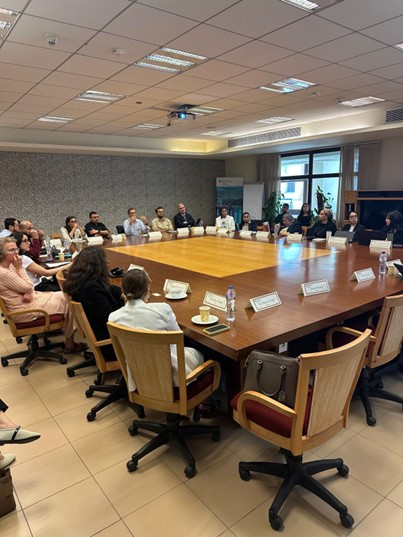
As migration, labor mobility, and demographic transitions reshape both African and European labor markets, the need for robust, future-ready skills systems has never been more urgent. To explore Egypt’s role in this evolving landscape, GS4S partner American University in Cairo hosted a high-level, multi-stakeholder roundtable with the participation of:
• The Ministry of Economic Planning, Development and International Cooperation https://mped.gov.eg/
• The Micro, Small and Medium Size Enterprises Development Agency
https://www.msmeda.org.eg/
• The EU Delegation in Egypt
• The International Organization for Migration https://www.iom.int/
• Deutsche Gesellschaft für Internationale Zusammenarbeit Egypt https://www.giz.de/en/regions/africa/egypt
•Egyptian NGO Ta’heal focused on building capacities
•National Academy for Science and Skills Academy training and education institution
•Center for Migration and Refugees Studies www.aucegypt.edu/cmrs
•Abdul Latif Jameel Poverty Action Lab MENA
https://www.povertyactionlab.org/region/middle-east-and-north-africa
The event brought together policymakers, training providers, researchers, and private sector leaders to:
• Evaluate the current skilling, reskilling, and upskilling landscape in Egypt
• Identify persistent skills gaps in priority sectors: IT & Digital, Construction, and Care
• Explore policy-relevant, evidence-based approaches to strengthen Egypt’s skills ecosystem and contribute to broader regional development and mobility goals
From National Action to Regional Impact
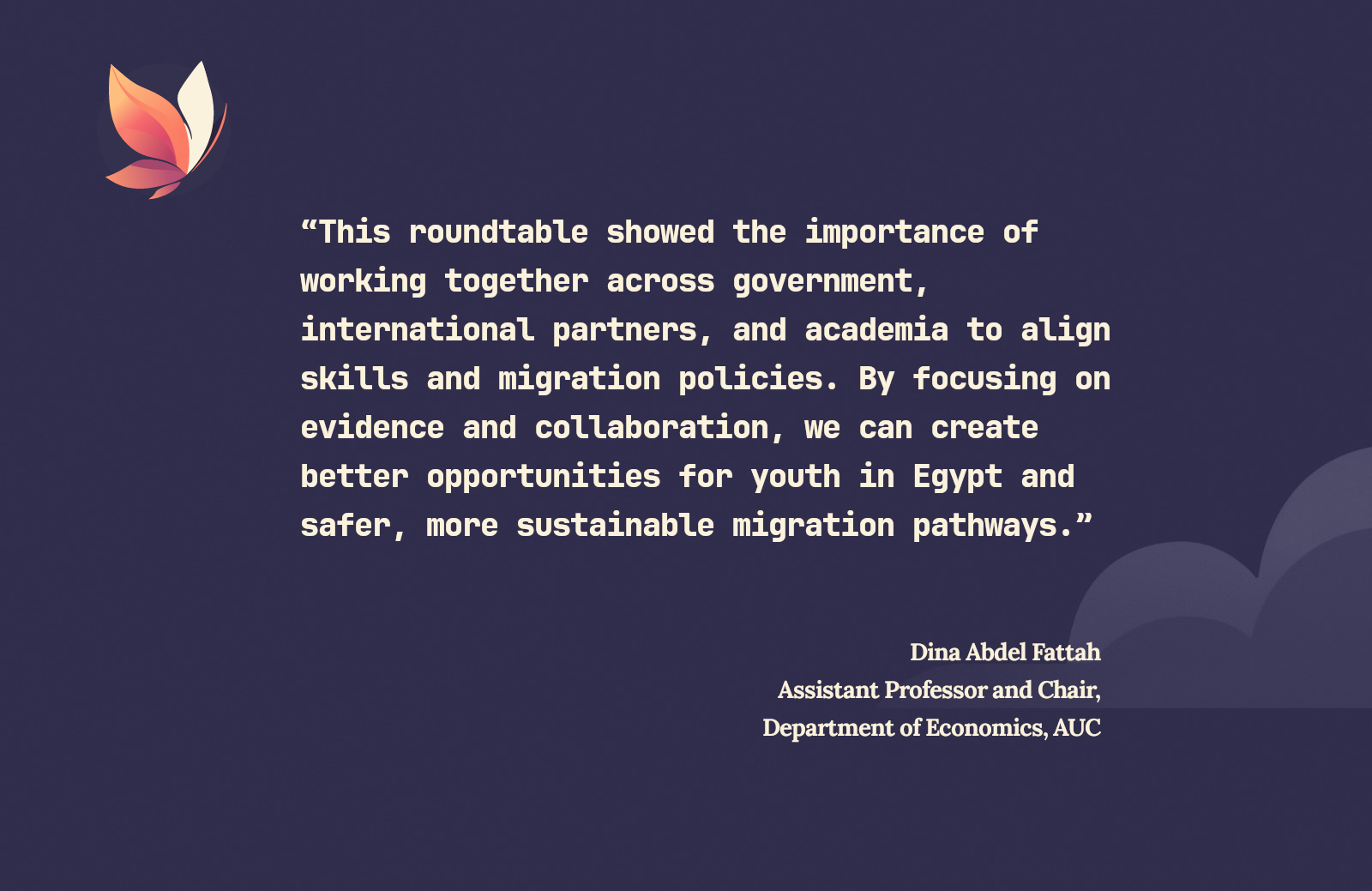
Egypt plays a strategic role as both a labor-sending and labor-receiving country. Aligning its skills ecosystem with current and future labor market demands is critical not only for national development but also for sustainable labor mobility across the EU-Mediterranean region.
Key takeaways for EU policymakers and labor market actors:
Mutual benefits of mobility: Targeted skilling and upskilling in sectors like care and construction can meet labor demands in Europe while creating economic opportunities in Egypt
Beyond migration control: A development-centered approach to skills helps address root causes of irregular migration by enhancing employability at home and abroad
Evidence for policy: Data gaps in labor market forecasting and skills mapping persist. Stronger research-policy linkages are needed to design agile, responsive systems
The role of partnerships: Public-private-academic collaboration is essential to co-design and scale solutions that are both locally relevant and internationally transferrable
Looking Ahead
The recommendations emerging from this roundtable will inform ongoing GS4S activities and contribute to a broader agenda of skills-based development cooperation between Africa and Europe. With the European Pact on Migration and Asylum, EU Talent Partnership Initiative, and the EU Global Gateway strategy emphasizing skills partnerships, Egypt offers a compelling case for integrated, actionable models of cooperation. Policymakers, researchers, and practitioners are invited to follow the next phase of GS4S for further insights and opportunities for synergy and collaboration.
About GS4S: The Global Skills for Sustainable Development (GS4S) initiative, funded under Horizon Europe grant 101132377, is focused on building partnerships between the EU and targeted countries in the EEA, Western Balkans, Middle East and North Africa, West Africa, and South/South-East Asia, to propose multi-level evidence-based policies on labour migration governance and alternative ways to address shortages in three sectors: IT/Digital, Construction, and Care. Through research, training, and stakeholder engagement, GS4S aims to contribute toward creating sustainable, scalable models of workforce development.
#GS4S #Migration #Skills #Development #SkillsForMobility #LaborMarketPolicy #EUExternalAction #VET #GreenSkills #DigitalTransition #InclusiveGrowth #Egypt #EU #AfricaEuropePartnership #PolicyResearch #SkillsPartnerships